How to Choose the Best Strong Base Anion Resin for Your Needs
Choosing the right strong base anion resin is crucial for various industrial applications. The global market for ion exchange resins is projected to reach $2.5 billion by 2025, with strong base anion resins accounting for a significant share. These resins are essential in water treatment, pharmaceutical production, and food processing. Matching the resin properties to specific needs can enhance efficiency and reduce operational costs.
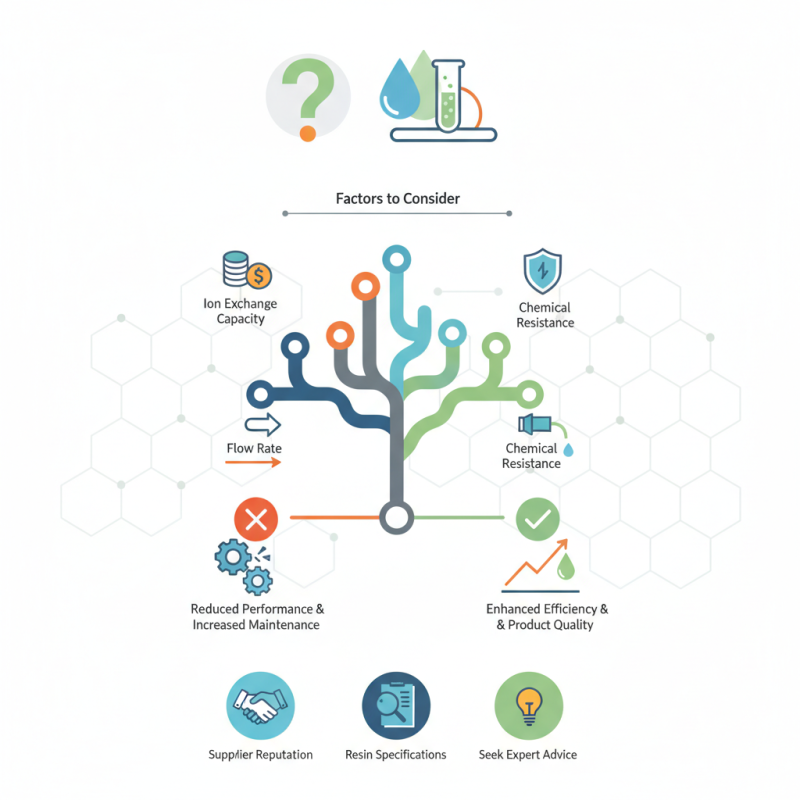
Many factors influence the selection process. Factors such as ion exchange capacity, flow rate, and chemical resistance should not be overlooked. Industry reports suggest that the wrong choice can lead to reduced performance and increased maintenance needs. Moreover, poor understanding of resin types may result in unfulfilled expectations. Users often underestimate the impact of resin quality on end products.
A thoughtful approach is necessary. Understanding supplier reputation and resin specifications is vital. Reports indicate that using subpar resins can compromise water quality and product integrity. Buyers should ask critical questions and seek expert advice. It's important to admit that the best choice may not always be apparent. Exploring options thoroughly will yield better outcomes in the long run.
Understanding Strong Base Anion Resins: Definition and Types
Strong base anion resins are vital in various industries. These resins effectively remove anions from solutions. Understanding their types and applications is crucial for making informed choices.
There are primarily two types of strong base anion resins:Type I and Type II. Type I resins dominate in chlorination resistance. They handle harsher conditions well. According to industry reports, Type II resins have higher capacity, which makes them ideal for specific applications. However, their performance can diminish in higher temperatures.
Choosing the right resin isn't straightforward. Factors like operational conditions and desired outcomes play a role. For instance, a resin may perform excellently in one application but not in another. Observations indicate that users often overlook temperature limits. This can lead to unexpected failures. Using the wrong type might incur additional costs and time losses. Performance evaluations on varying anion loads reveal inconsistencies. It is vital to assess how a resin behaves in diverse scenarios before finalizing a choice.
Key Factors to Consider When Selecting a Strong Base Anion Resin
When selecting a strong base anion resin, there are key factors to evaluate. The application is crucial. Different processes require different specifications. Consider the type of ions you aim to remove. Some resins excel in specific conditions but may falter in others. For example, temperature and pH play significant roles. It’s essential to match these factors to your needs.
The capacity and exchange rate are other vital aspects. Higher capacity means longer service life. But this comes with a trade-off. Sometimes, a high-capacity resin is not necessary. Analyze your usage patterns honestly. Will you need frequent replacements? Resist the urge to overspecify.
Additionally, consider the physical properties of the resin. The particle size influences flow rates. Smaller beads can lead to higher resistance. Is that suitable for your system? Evaluate the equipment size as well. Not everything made for general use will fit perfectly. Sometimes a tailored approach works better. Being aware of these details ensures better results.
Key Factors to Consider When Selecting a Strong Base Anion Resin
Comparative Analysis of Strong Base Anion Resin Performance Metrics
When selecting a strong base anion resin, it’s essential to analyze its performance metrics. Various studies show that factors like operating temperature, flow rate, and feed water quality significantly impact resin effectiveness. For instance, the renowned Journal of Water Chemistry reports that resins perform optimally at temperatures below 60°C. Performance drops considerably above this threshold.
Different resins exhibit variance in their ion exchange capacity. Some reports indicate that high-capacity resins can achieve ion exchange rates exceeding 1.5 meq/mL. This metric is key for industries needing efficient contaminant removal. Interestingly, not all high-capacity options deliver optimal performance across diverse applications. Some might excel in one area but underperform in others, prompting a need for careful consideration.
The selectivity of a resin is another critical parameter. Various studies indicate that certain resins preferentially bind specific anions. For example, some may favor nitrate over sulfate. Users must balance such selectivity with their specific needs. Performance metrics can sometimes lead to overconfidence in a resin's capabilities. Rigorous testing in real-world conditions is often lacking. Hence, evaluating and comparing performance data is just as crucial as choosing based on capacity alone.
Industry Applications: Where Strong Base Anion Resins Are Utilized
Strong base anion resins are vital in many industries. They play a significant role in water treatment, pharmaceuticals, and chemical processing. According to a recent market report, the global demand for ion exchange resins is projected to reach over $3 billion by 2025. This growth underscores their importance across various sectors.
In power generation, strong base anion resins are used for deionization. They help ensure water quality for steam production. The food and beverage industry also relies on these resins for purification. Water quality impacts product safety and taste. Recent studies show that using appropriate resins can reduce contaminants by over 90%. This reduction is crucial for maintaining high standards.
Chemical processing employs these resins for separation and purification. They increase efficiency in producing high-purity chemicals. Yet, one common challenge is selecting the right resin type. Different applications require specific properties. Not all resin grades perform equally in all conditions. It may take time to pinpoint the best options. Some users may overlook the importance of compatibility. These factors can influence operational costs and efficiency. A proper understanding of needs is vital.
Cost and Maintenance Considerations for Strong Base Anion Resins
When selecting a strong base anion resin, cost and maintenance are crucial factors. The initial purchase price of resin can vary significantly. According to a report by the International Water Treatment Association, resin costs can range from $50 to $150 per cubic foot. This variance often reflects the quality and specific application. Higher grades generally offer better performance but at a steeper price.
Maintenance is another aspect to consider. Regular monitoring of resin performance can prevent costly downtime. Operators should test the resin capacity periodically. The industry suggests conducting evaluations every 6 months. If the resin is not maintained, it can lead to decreased efficiency. In some cases, this can result in a 20% drop in output efficiency.
Moreover, the lifespan of the resin is essential. Most strong base anion resins last between 3 to 7 years with proper care. If neglected, a resin could fail much sooner. Replacement costs can accumulate, impacting overall budget. Understanding these nuances helps make informed choices. Balancing upfront costs with ongoing maintenance is vital for long-term success.