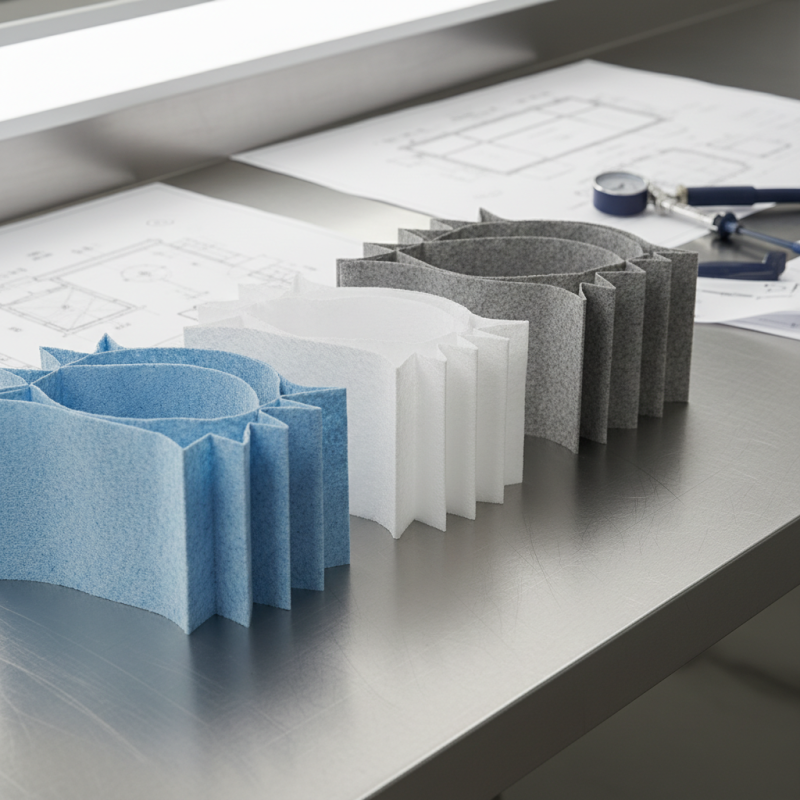
Essential Tips for Choosing Pocket Filter Media?
Choosing the right pocket filter media is crucial for effective air quality management. This selection process is often overwhelming. Many factors come into play, such as filtration efficiency, resistance, and material type.
It is essential to understand your specific needs. pocket filter media varies widely in performance capabilities. Some filters trap larger particles efficiently, while others excel in capturing fine dust. Not all filters suit every environment.
Take into account the operational costs. A more efficient pocket filter media might have a higher initial price but can save money long-term. Reflect on the maintenance and frequent replacements. Choosing poorly can lead to frustration and increased expenses. Making an informed choice is a responsibility.
Understanding Pocket Filter Media: Types and Characteristics
Pocket filter media play a critical role in air filtration systems. Understanding their types and characteristics is essential for effective filter selection. Common types include:
- Synthetic
- Fiberglass
- Pleated filters
Each type has unique properties that determine its performance and efficiency.
Synthetic media often offer high dust holding capacity.
Fiberglass options provide cost-effective solutions but may lack durability.
Pleated filters increase the surface area, leading to better airflow and filtration efficiency. The
MERV rating system helps to evaluate the performance of pocket filter media. Higher ratings indicate
better particle capture, but they can also restrict airflow.
Balancing filtration efficiency and airflow is crucial, as poor air circulation can lead to higher energy costs.
It is important to consider the application when choosing pocket filters. For instance, some environments may demand higher filtration efficiency and others might prioritize cost. Not all filters perform equally well under different conditions.
Reflect on your needs carefully. Consider the dust levels in your environment.
Test various types to find the most suitable option.
Choose wisely. Key Factors to Consider When Selecting Pocket Filter Media
When selecting pocket filter media, several key factors must guide your decision. The filtration efficiency is paramount. It's crucial to choose media that can effectively capture the particles relevant to your environment. Consider the size of the particles you need to filter. This will directly influence the type of media required. High-efficiency filters might capture smaller particles but could also restrict airflow.
Another important aspect is the media's resistance and durability. The filter should withstand the conditions of your specific application. If your environment is prone to high humidity or temperature fluctuations, these factors must influence your choice. A fragile filter may lead to frequent replacements and increased costs.
Tips for optimal selection include checking the air permeability of the media. A high flow rate may improve efficiency but can lead to a reduced lifespan if not balanced correctly. Also, consider the filter's surface area. More surface area usually means better performance but can increase size requirements. Pay attention to these details. A poor choice could lead to increased energy consumption and decreased overall efficiency. Reflect on how your choices impact performance over time.
Evaluating Filtration Efficiency and Airflow Resistance
When evaluating pocket filter media, filtration efficiency is crucial. The efficiency determines how effectively the filter removes particles from the air. High-efficiency media typically captures smaller particles, improving indoor air quality. Commonly, filtration ratings are given as MERV (Minimum Efficiency Reporting Value). The higher the MERV rating, the better the filter performs against particulate matter.
However, increased efficiency often leads to higher airflow resistance. Airflow resistance is a measure of how much the filter hinders air movement. A filter with high resistance can strain the HVAC system. It may result in reduced energy efficiency. Striking a balance between filtration efficiency and airflow is essential. A filter that is too restrictive can cause mechanical failure or increased power consumption.
Considering the specific environment is important. It’s easy to overlook unique factors like humidity or dust levels. These can affect filter performance. In real applications, adjustments may be necessary based on practical outcomes. Regular checks and evaluations will ensure optimal performance. Finding the right pocket filter media is not just about numbers; it requires a holistic view of the system as a whole.
Maintenance and Replacement Considerations for Pocket Filters
When considering pocket filters, maintenance and replacement play a crucial role. Regular checks on filter media ensure optimal performance. Look for signs of dirt buildup and decreased airflow. When filters are clogged, they can't function well. Changes in air quality can be noticeable at this stage. A dirty filter not only affects efficiency but also impacts energy costs.
Replacement frequency varies based on usage. In a high-dust environment, filters may need more frequent replacements. For residential setups, twice a year might suffice. However, industrial settings often require monthly changes. It's essential to keep a maintenance log. This encourages regular attention and helps in identifying patterns over time.
Choosing the right time for replacement can be tricky. Some users wait too long, leading to unexpected issues. Others replace filters too soon, wasting resources. Tracking performance and noting any unusual smells or sounds can help. Filters work silently, but their effectiveness should never be ignored.
Maintenance and Replacement Considerations for Pocket Filters
Cost-Effectiveness and Sustainability in Filter Media Choice
When selecting pocket filter media, consider cost-effectiveness and sustainability. This choice impacts both budget and the environment. It’s not enough to just look at initial costs. Long-term efficiency and durability should be key factors. A cheaper option might lead to frequent replacements. This adds to costs and waste.
Sustainable materials are gaining traction. These often require less energy for production and can be recycled. Using eco-friendly media is a step towards a smaller carbon footprint. However, sourcing sustainable filter media might not always be straightforward. There are varying qualities, and not all claims hold up under scrutiny.
Real-world applications can highlight the trade-offs inherent in the decision. For instance, high-efficiency filters often come with a steeper upfront cost. But they might last longer. Users should analyze their specific needs carefully. Sometimes, investing more initially can lead to savings down the road. Reflecting on these options can lead to better choices for the environment and finances.