What Are the Top Types of Chocolate Enrobing Machines?
Choosing the right Chocolate Enrobing Machine can shape product quality, production speed, and daily operating costs. In a working chocolate line, the machine does more than cover a biscuit or confection. It controls chocolate flow, coating thickness, product spacing, and transfer through cooling. A thin, even shell should look smooth under inspection. It should also break cleanly when the customer bites it.
Different production goals require different machine designs. Curtain enrobers create a continuous chocolate curtain for biscuits, wafers, bars, and similar products. Bottoming machines coat only the underside, helping manufacturers reduce chocolate use while maintaining a finished appearance. Full enrobing systems combine top, side, and bottom coverage. Compact tabletop models suit testing rooms, small bakeries, and limited batches. Industrial lines offer wider belts, automated tempering, and integrated cooling tunnels for higher output.
The details matter. A 400-millimeter belt may suit a growing workshop, while a wider line supports larger volumes. Adjustable vibration can remove air pockets and excess chocolate. Temperature stability helps prevent dull surfaces, cracking, or fat bloom. Still, no machine solves every production problem. Product shape, chocolate viscosity, room temperature, and operator skill all influence results. That part is easy to underestimate.
This guide examines the top types of chocolate enrobing machines, their working principles, suitable applications, and practical limitations. It also considers cleaning access, food-grade construction, maintenance needs, and energy use. These factors often matter more than impressive output figures. A reliable choice should match the entire production process, not just one attractive specification.
Chocolate Enrobing Machines: Definition and Core Operating Principles
Chocolate Enrobing Machines: Definition and Core Operating Principles
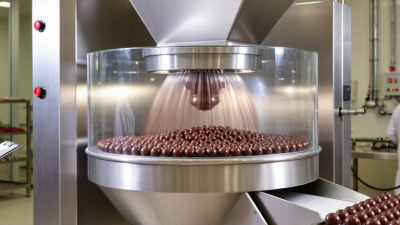
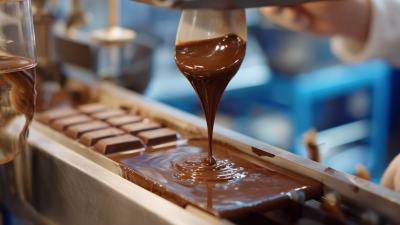
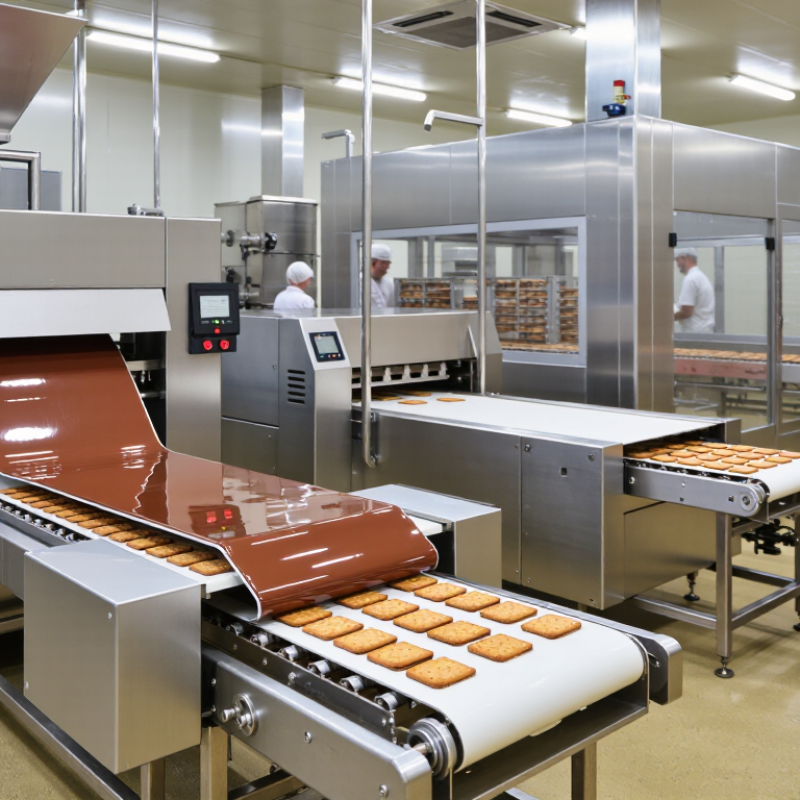
A chocolate enrobing machine coats products with a controlled chocolate layer. The product travels on a moving wire belt. A chocolate curtain covers its top surface. Bottomers coat the underside. Vibrating belts remove excess chocolate and reduce uneven edges. Cooling tunnels then solidify the shell under controlled temperature and airflow.
The main types include full enrobing machines, bottoming units, and combined lines with tempering systems. Full enrobers suit biscuits, bars, wafers, and filled centers. Bottomers use less chocolate and target partial coverage. Tempering-equipped systems stabilize cocoa butter crystals. This creates a firm snap, clean gloss, and better resistance to melting.
A 2023 Grand View Research report valued the global chocolate market at approximately USD 119.39 billion. It also projected continued growth through 2030. That pressure encourages higher throughput, but speed alone can damage coating quality.
In my experience, small temperature changes can create dull surfaces or thick tails. Operators often underestimate belt vibration.
Tips:
Check chocolate temperature at the curtain, not only inside the tank. Keep the belt speed consistent. Record product temperature before coating. Clean scraper edges frequently. These simple checks expose problems earlier.
PMMI industry reports continue to highlight automation, labor efficiency, and hygienic design as major packaging priorities. Enrobers now commonly use recipe controls, servo-driven belts, and adjustable air knives.
Still, sensors cannot replace skilled observation. A machine may report stable settings while the coating feels brittle. That mismatch deserves investigation, not quick adjustment.
Automatic Chocolate Enrobing Machines for High-Volume Production
What Are the Top Types of Chocolate Enrobing Machines?
Automatic chocolate enrobing machines support fast, consistent production lines.
The main types include full-curtain enrobers, bottoming units, and combination systems.
Full-curtain machines pass products through a controlled chocolate waterfall. They suit bars, biscuits, wafers, and molded centers.
Bottoming units coat only the underside. Combination systems apply a base layer before full coverage.
Throughput matters in high-volume production. A modern curtain enrober can process hundreds of kilograms per hour, depending on product size, coating thickness, and cooling capacity.
Grand View Research valued the global chocolate market at approximately USD 127.9 billion in 2023. Its report also forecasts continued growth through 2030. That expansion increases pressure for stable automation, not simply faster equipment.
Temperature control remains critical. Chocolate usually requires accurate melting, tempering, and cooling control.
Even small temperature changes can create dull surfaces or weak snap.
Industry equipment studies from Mordor Intelligence identify automation and process efficiency as major growth factors in chocolate processing equipment.
Operators should examine belt width, pump design, viscosity control, cleaning access, and cooling tunnel length.
A machine may advertise impressive hourly output.
Real production can be lower after changeovers, cleaning, and product adjustments. That gap deserves honest measurement.
Some facilities overestimate their needs. Bigger is not always better.
A smaller automatic line may deliver higher yearly efficiency when product variety is high.
Trial runs with the actual chocolate and center products remain essential. Their results reveal problems that brochures often miss.
Semi-Automatic Chocolate Enrobing Machines for Flexible Manufacturing
What Are the Top Types of Chocolate Enrobing Machines?
Chocolate enrobing machines usually fall into automatic, continuous, and semi-automatic types. Semi-automatic chocolate enrobing machines suit flexible manufacturing best. They allow operators to adjust coating thickness, belt speed, and product spacing with greater control. This matters when producing biscuits, bars, truffles, or seasonal shapes in smaller batches. A compact tempering unit can feed the curtain consistently. Operators can also change recipes without stopping an entire production line.
In practical use, semi-automatic equipment reduces the pressure of large minimum runs. It supports product testing and frequent format changes. The operator still needs to monitor chocolate temperature closely. A difference of one or two degrees can affect gloss, snap, and coating stability. The machine should provide even chocolate flow, accessible cleaning points, and accurate conveyor adjustment. Stainless steel contact surfaces also help maintain hygienic production. However, manual loading may limit output. That weakness is easy to underestimate.
Tips: Check the working width before purchase. Measure your largest product and leave space for movement. Ask for temperature-control accuracy, cleaning instructions, and maintenance access. Test real ingredients, not only demonstration chocolate. Viscosity can change quickly. Keep a simple production record for belt speed, temperature, and coating weight. It may reveal problems that visual checks miss. A short trial often teaches more than a polished sales specification.
Key Factors for Comparing Chocolate Enrobing Machine Types
What Are the Top Types of Chocolate Enrobing Machines?
Key Factors for Comparing Chocolate Enrobing Machine Types
Choosing an enrobing machine starts with the product, not the brochure. Curtain enrobers cover biscuits, bars, and wafers evenly. Bottoming units apply chocolate only underneath. Full enrobers coat the base, sides, and top. One-shot systems form filled pieces in one controlled deposit. They suit centers with different fillings, sizes, or shapes. Product trials remain essential. Chocolate flow changes quickly with temperature.
Compare measurable details. Check throughput in kilograms per hour, coating pickup percentage, belt width, and changeover time. Confirm whether the machine maintains chocolate within a narrow temperature range. Poor temper control can create dull surfaces or weak snap. Grand View Research valued the global chocolate market at about US$119.4 billion in 2023, with continued growth forecast through 2030. That growth increases pressure for consistent output. The U.S. Department of Energy also identifies motor-driven equipment as a major industrial electricity user. Energy consumption deserves attention, not just production speed. PMMI industry reports repeatedly highlight automation, labor availability, and faster changeovers as investment drivers. However, a bigger machine is not automatically better. It may waste space, chocolate, and cleaning time.
Tips: Request test data using your actual recipe and center. Measure startup waste, cleaning duration, and chocolate recovery. Ask operators to review access points. They often notice practical problems earlier than spreadsheets. No comparison is perfect; maintenance skill and factory humidity can change the result.
What Are the Top Types of Chocolate Enrobing Machines?
The chart compares typical nominal throughput ranges for common chocolate enrobing machine configurations. Actual capacity depends on product size, coating thickness, belt width, chocolate viscosity, cooling length, and operating speed.
Continuous industrial enrobers generally provide the highest output, while compact and batch-oriented systems are better suited to smaller production volumes, frequent product changes, or limited floor space.